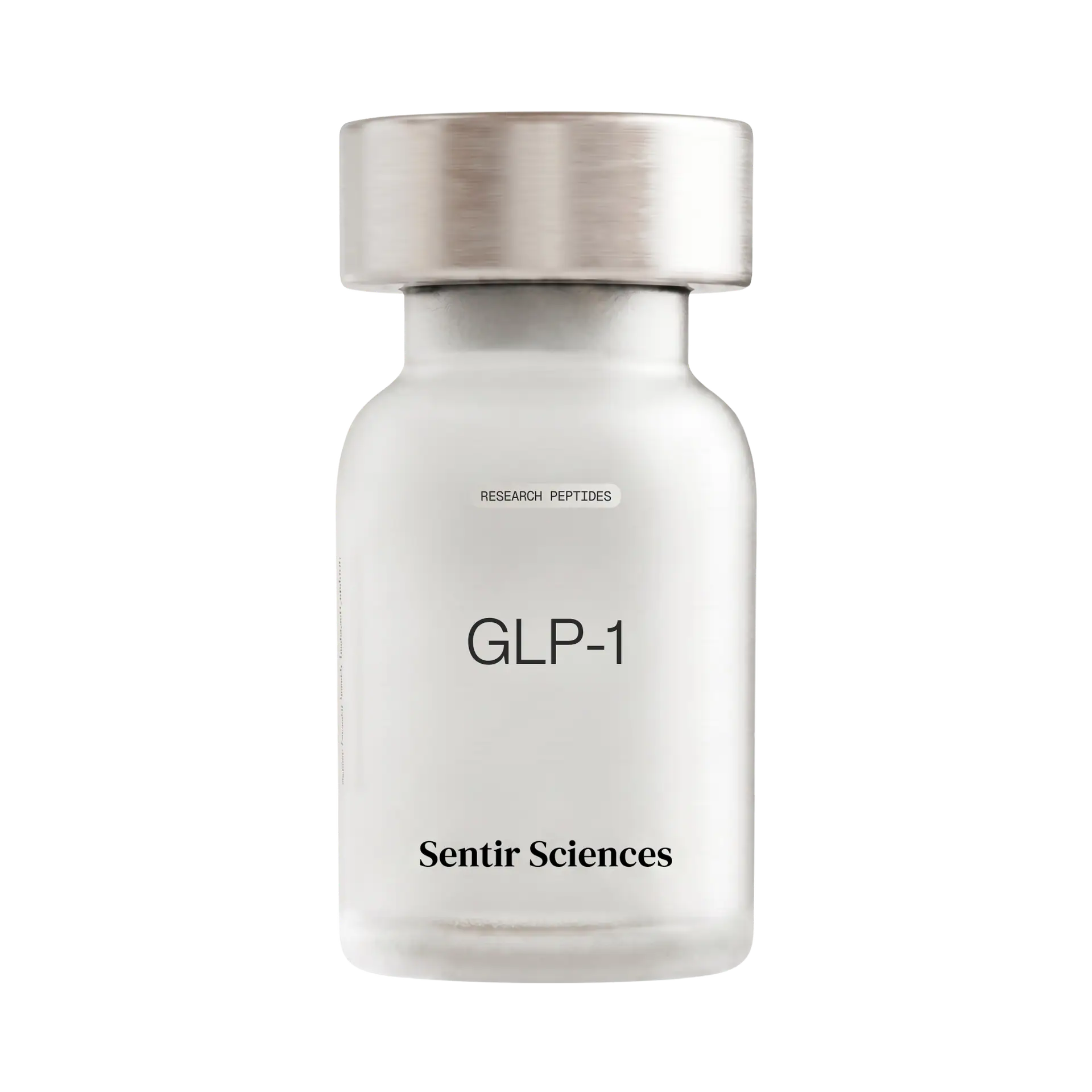
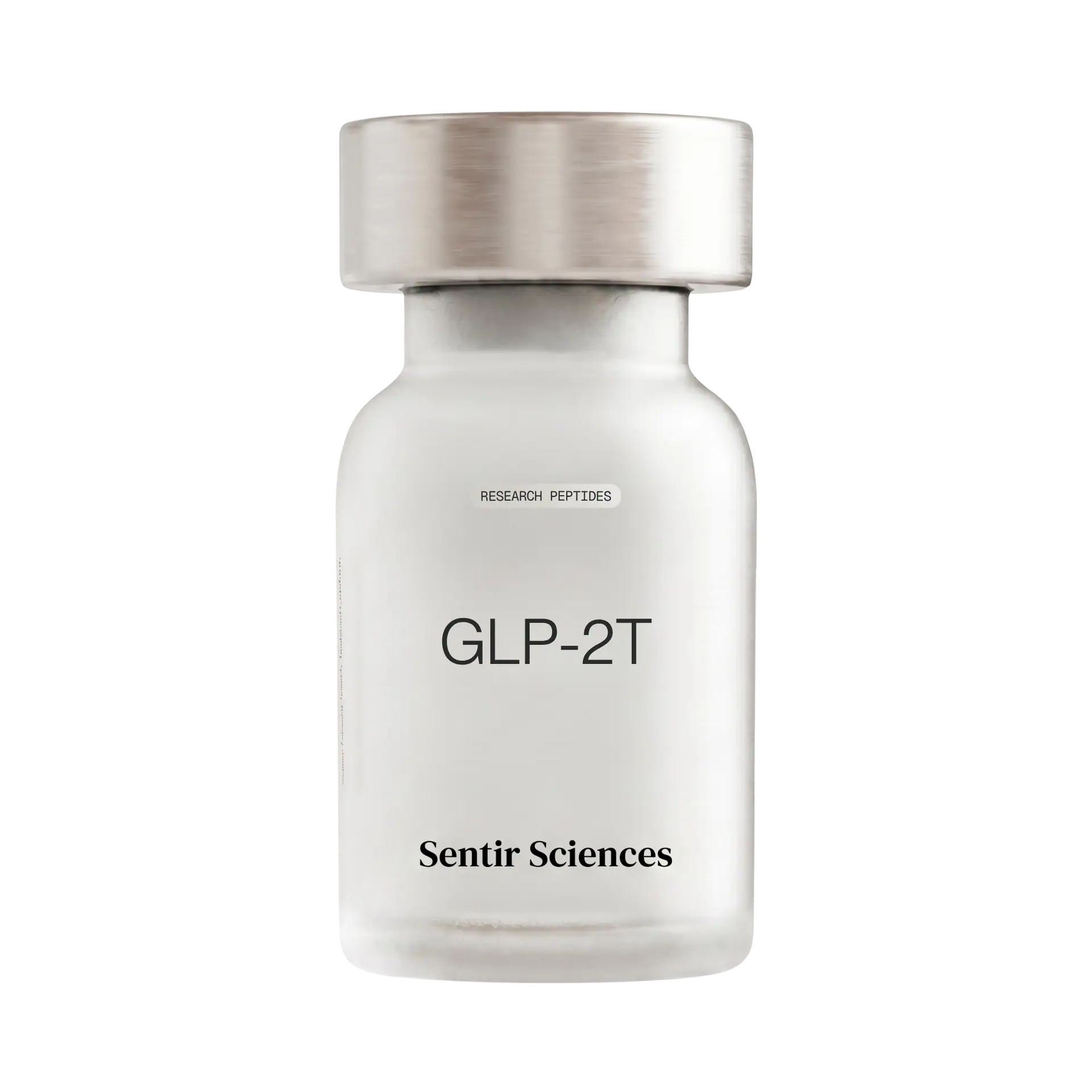
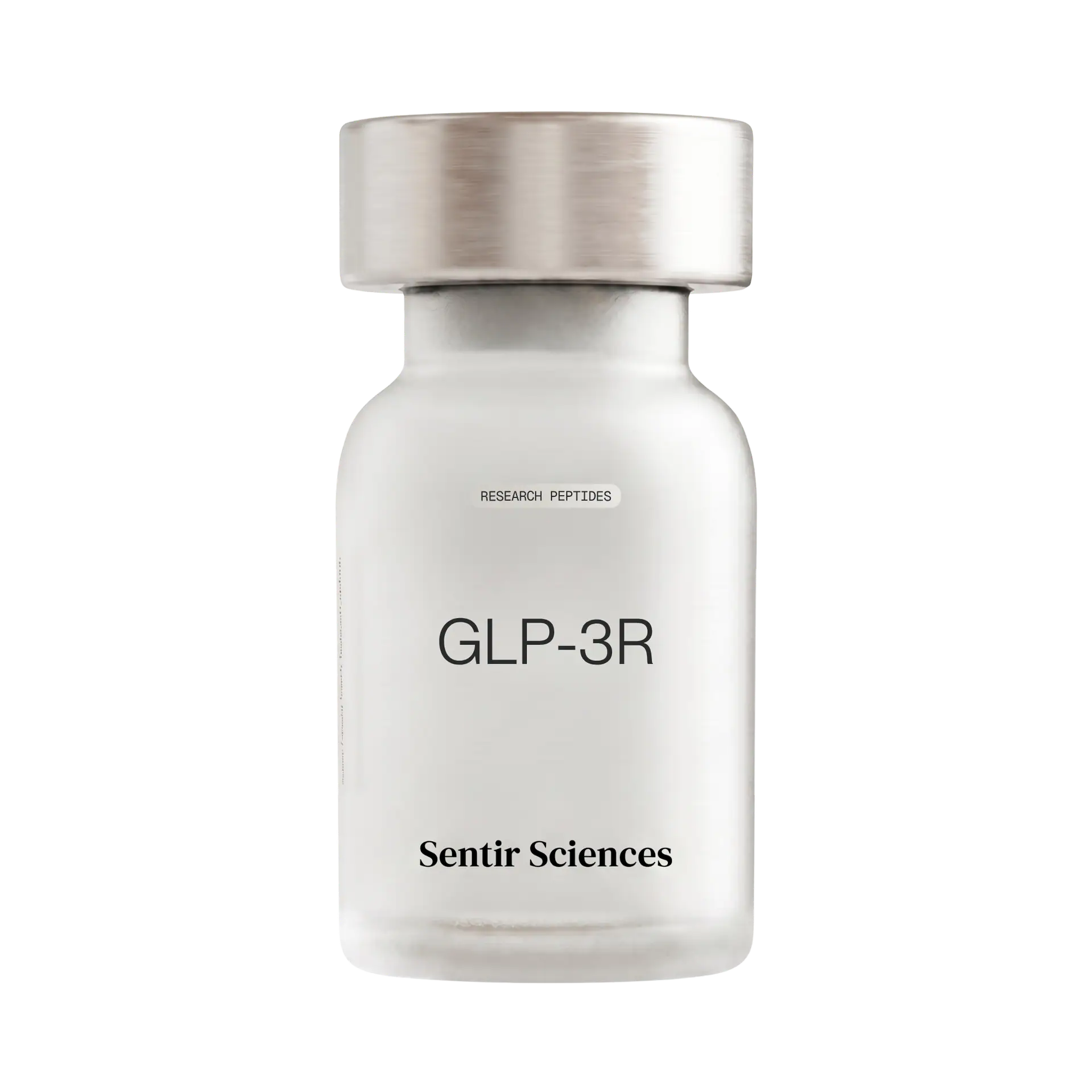
The incretin ladder: one, two, three receptors.
The most consequential story in modern metabolic research is a ladder: peptides engineered to climb from one receptor to two, then three. Here's the biology behind the class.
Start with what an incretin is.
When food reaches the gut, the intestine releases hormones that warn the rest of the body ahead of the incoming glucose. The two that matter here are GLP-1 (glucagon-like peptide-1) and GIP (glucose-dependent insulinotropic polypeptide) — the incretins. Their signature move is glucose-dependent insulin amplification: they prime the pancreas to release insulin, but only when glucose is actually elevated. GLP-1 additionally slows gastric emptying and signals satiety to the brain, which is why this family sits at the intersection of glucose regulation and appetite.
The native hormones are frustrating research subjects — enzymes, chiefly DPP-4, destroy them within minutes. The entire agonist class exists to fix that: engineered analogues that keep the receptor activity while resisting degradation, typically via protective substitutions plus a fatty-acid chain that binds serum albumin and stretches activity from minutes into days. What are research peptides covers that engineering pattern generally; incretins are its most celebrated application.
Rung one: single agonists.
A single agonist like our GLP-1 activates the GLP-1 receptor alone. This is the reference class — the most thoroughly characterized receptor pharmacology in metabolic science, with published assay protocols for everything from receptor internalization to satiety models. In research designs it's the baseline: the known quantity newer molecules are measured against.
Rung two: dual agonists and the GIP surprise.
For years GIP was the discarded incretin — early work suggested its signalling was blunted where it mattered most, and the field moved on. Dual GIP/GLP-1 agonists like GLP-2T forced a rethink: engaging both receptors outperformed single agonism across preclinical metabolic endpoints, and suddenly GIP's contribution — insulin response, adipose-tissue signalling, possibly moderating the nausea-adjacent signalling of GLP-1 — became one of the field's liveliest questions. Dual agonists are also deliberately imbalanced molecules: full potency at GIP, tuned-down potency at GLP-1, a design choice that is itself a research subject (receptor bias).
Rung three: adding glucagon.
The third rung, represented by GLP-3R, adds the glucagon receptor. Glucagon is glucose-raising on its own — which sounds like the wrong guest at this party — but its receptor also drives hepatic lipid metabolism and increases energy expenditure. The triple-agonist hypothesis: pair the intake-side signals (GLP-1, GIP) with an expenditure-side signal (glucagon), inside one molecule where the glucose-raising arm is checked by the other two. Preclinically the architecture has been strikingly productive, and characterizing what each receptor contributes to the whole is the class's central open question.
| Class | Receptors | Catalog reference | The research question it serves |
|---|---|---|---|
| Single agonist | GLP-1 | GLP-1 | The baseline: fully characterized single-receptor pharmacology |
| Dual agonist | GIP + GLP-1 | GLP-2T | What does GIP add? Crosstalk and receptor-bias studies |
| Triple agonist | GIP + GLP-1 + glucagon | GLP-3R | Can expenditure-side signalling be built into the same molecule? |
Why ladder studies want one supplier.
Comparative incretin work lives and dies on controlling variables, and the compounds themselves are the biggest one. Running one, two and three-receptor arms from a single source, verified by the same independent laboratory to the same standard — purity, identity, endotoxin, batch COAs — removes the supplier as a confound. That's the design logic our metabolic line is built around, and the practical handling notes for these long acylated peptides are in the storage guide.
Common questions.
Incretins amplify insulin release only when glucose is elevated — the signal switches off as glucose normalizes. This built-in conditionality is a defining property of the receptor family and a major reason it's so heavily studied.
Early studies suggested GIP signalling was blunted in key metabolic states, so the field concentrated on GLP-1. Dual-agonist results reversed that verdict — much of the current literature is effectively a re-examination of what GIP-receptor activity contributes.
Alone, glucagon is glucose-raising — that's its job. The triple-agonist design pairs it with two glucose-lowering incretin signals, betting that the expenditure and hepatic benefits arrive while the incretin arms hold glucose in check. Testing that balance is exactly what the class exists for.