What “research use only” actually means.
Four words appear on every vial we sell and every page of this site. They are not decoration, and a vendor's relationship with them tells you nearly everything about the vendor.
A category, not a disclaimer.
“Research use only” describes a real regulatory category: laboratory reagents — chemicals supplied for scientific work in cell culture, biochemical assays and preclinical animal models. Reagents are not drugs. In the United States, anything intended to diagnose, treat, cure or prevent disease in people is a drug by definition and must pass through FDA approval — clinical trials, pharmaceutical-grade manufacturing, the entire apparatus. Research peptides have been through none of that. The RUO label is the boundary that says so.
That's why the phrase appears everywhere on a legitimate vendor's site: it isn't nervous legal wallpaper, it's an accurate statement of what the product is. The research peptides we supply are verified chemicals, characterized to reagent standards — independently tested, batch-documented — and offered strictly for laboratory study.
What it means concretely.
- Not for human use, in any form or route — and not for veterinary use either.
- Not manufactured under pharmaceutical GMP. Reagent-grade quality control (purity, identity, endotoxin) is a real standard, but it is a laboratory standard, not a clinical one.
- No health claims. A research chemical has no approved indications; a vendor promising human outcomes is making drug claims about something that has never been evaluated as a drug.
- Sold to purchasers who affirm the research-use terms — that's the agreement you accept at our gate and again in our Research Use Policy.
Where the research itself happens.
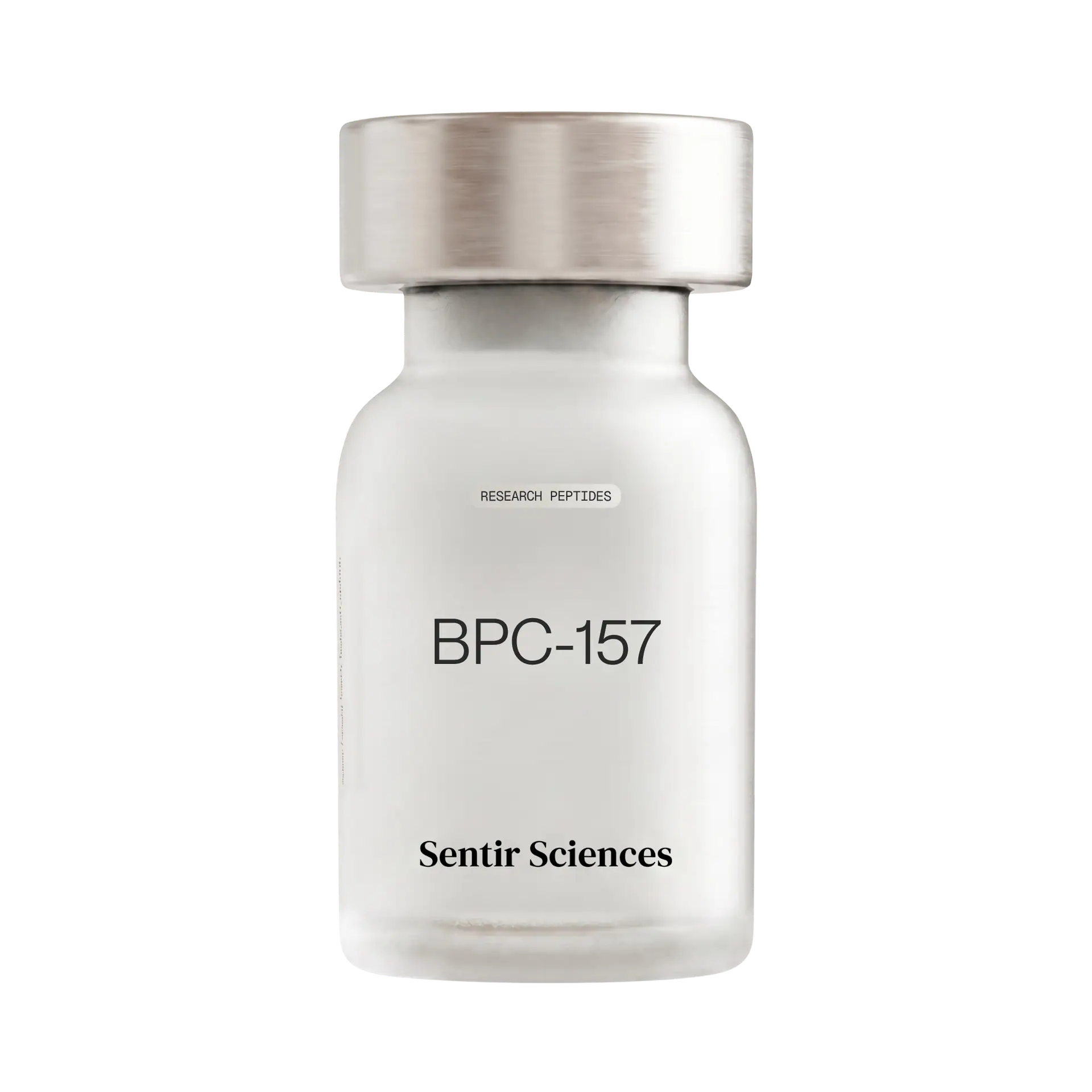
It's a fair question: if not in people, where does all this study occur? In the settings the preclinical literature describes — receptor-binding and signalling assays, cultured cell models, and animal models of the biology in question. When our BPC-157 page says the compound is extensively cited in tendon and gastrointestinal models, those are the studies meant: laboratory science, published in journals, indexed on PubMed. Every product page in our catalog links to the compound's primary literature for exactly this reason.
Why we hold the line — and why you should want us to.
A vendor's discipline about the RUO boundary is the best public signal of its discipline everywhere else. A supplier willing to wink at compliance — marketing research chemicals with dosage guides and outcome promises — is showing you its attitude toward rules generally, including the unglamorous ones about analytical honesty, batch documentation and endotoxin screening that actually determine what's in your vial. The vendors who blur the first line reliably blur the others.
Our implementation is straightforward: a 21+ age and research-use gate at the door, the policy restated at checkout, no human-use claims anywhere on the site, and vials labelled accordingly. What we spend our effort on instead is the part that can be done honestly and well — verification, documentation and plain-language information like this library.
Common questions.
Purchasers who are 21 or older and affirm our research-use terms — researchers and institutions acquiring laboratory reagents. Agreement to the Research Use Policy is a condition of every order.
No — it's an accurate description of the product category. Research peptides are laboratory reagents that have never been through drug approval, and representing them as anything else would be both illegal and false. Vendors who treat the label as a wink are advertising their compliance culture.
The whole storefront sits behind a 21+ research-access confirmation as part of our compliance posture — one confirmation, remembered on your device, covering the catalog and the library alike.